
Strata cleaning · Inner West & North Shore
Strata Cleaning Inner West and North Shore
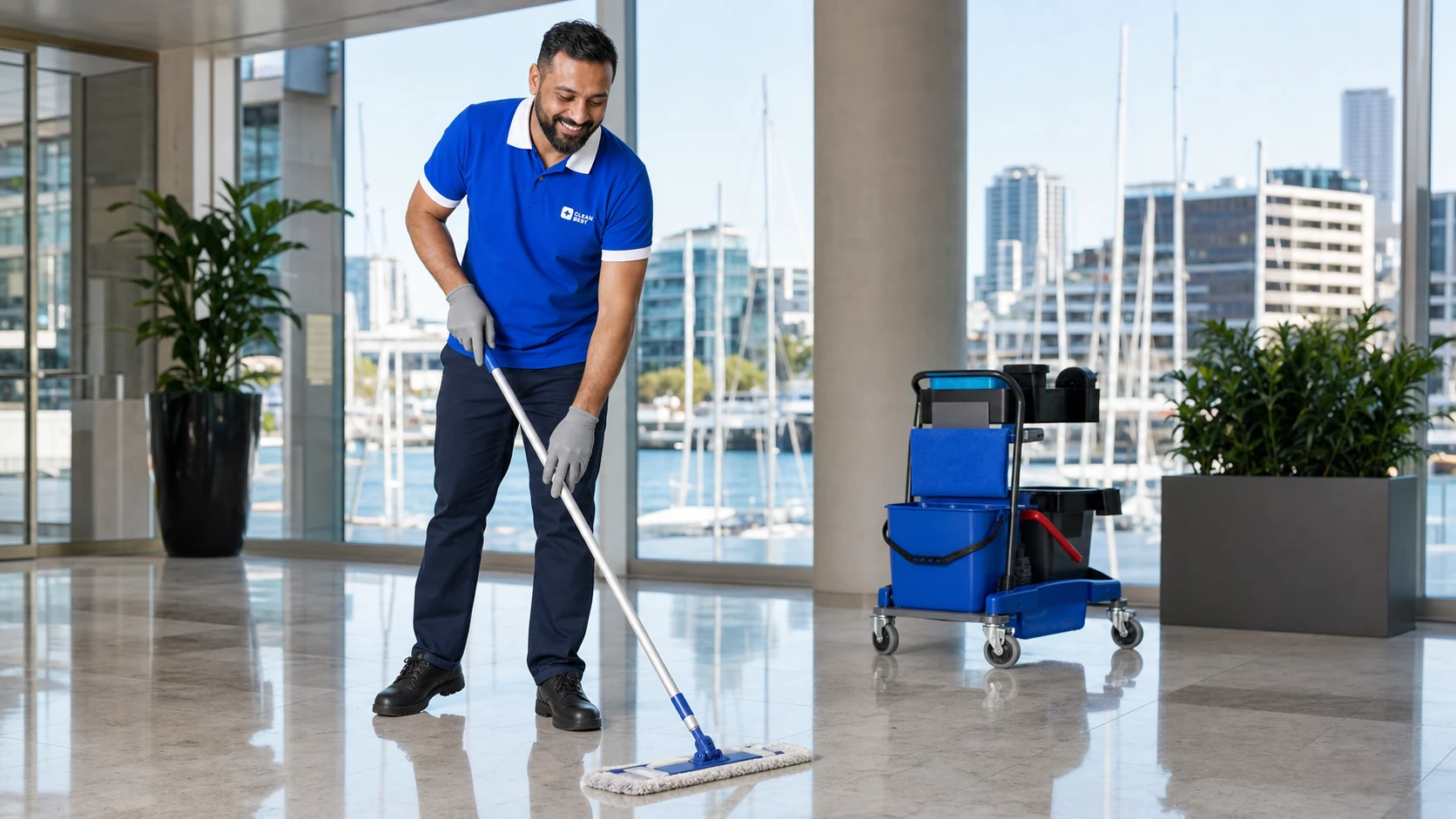
Foyers, lifts, corridors, fire stairs, bin rooms, car parks and driveways across the walk-ups of Newtown, Balmain and Marrickville and the blocks that step down from Crows Nest to Dee Why. Photographed for the committee every visit.
- Dated photo report to the committee after every round
- Bin room and bin bay on a real program, not a wipe
- Fire stairs and basement car park actually included
- pH-neutral chemistry on heritage tile and original timber
10+ years cleaning Sydney
Police-checked cleaners, insured, and rostered around Sydney traffic rather than a formula
Rostered this week in
- Newtown
- Balmain
- Marrickville
- Crows Nest
- $20m public liabilityPolice-checked cleaners, inducted on your building
- Rolling agreementWritten price inside 24 hours, no lock-in
What is strata cleaning in the Inner West?
Strata cleaning is the scheduled cleaning of the common property of an apartment building — the areas the owners corporation is responsible for, rather than anything inside an individual lot.
A standard scope for an Inner West or North Shore scheme covers the entry and foyer, entry glass and intercom, the lift car, tracks and thresholds, corridors and landings, fire stairs, the bin room and bin bay, the basement car park and its ramp, the mailbox area, any shared laundry, and external paths and the driveway. Gyms, pool surrounds and roof terraces are included where the scheme has them.
Frequency is set by lot count and entry foot traffic rather than building height: small walk-up schemes are typically serviced weekly, while larger buildings with lifts and car parks are cleaned two or three times a week. Clean Best reports to the committee or strata manager with dated photographs after every visit, and quotes after a free walkthrough of the whole scheme.
- 10+ years cleaning SydneyOn the road since 2015
- Police-checked cleanersBuilding-inducted, WWCC-cleared where the site needs it
- $20m public liabilityCertificate of currency on request
- Written quote in 24 hoursFixed price, no lock-in contract
The detail
Strata cleaning Inner West committees can actually audit
Strata cleaning Inner West schemes complain about follows a pattern so consistent you could set a calendar by it. The foyer looks fine — the foyer always looks fine, because it is the one space the cleaner knows the committee walks through. Then somebody goes down to the bin room in February. Somebody else uses the fire stairs for the first time in a year. And it turns out that everything more than twenty metres from the front door has been getting a glance rather than a clean.
This is not laziness so much as economics. Strata contracts are won on price, and the cheapest way to win one is to quote the visible areas and treat the rest as optional. So the honest version of this page is a list of the places we go that a cheap quote does not — and, in this part of Sydney, a note about what the building is made of.
Heritage surfaces, and the chemical that ruins them
The Inner West runs on old stock. Tessellated entry tiles, oiled or waxed hardwood, lead-light glass, lime-mortar brick — Balmain, Annandale and the terraced streets off Newtown are full of it, and the 1960s and 70s red-brick walk-ups of Dee Why and Kogarah bring their own terrazzo and vinyl. All of it punishes the wrong chemical. An alkaline stripper on original tessellated tile etches the glaze, and the etch does not come back. So every original surface gets pH-neutral chemistry and a soft pad, and the timber is damp-mopped rather than flooded. We set the whole of this out, era by era, in our guide to Sydney building types and how to clean them.
The bin room, which is the whole argument
In an Inner West or North Shore block the bin room is almost always the worst space and almost always the least specified. It is frequently below grade, reached down a ramp, poorly ventilated, and it deteriorates every single day whether anybody cleans it or not. By late summer it announces itself from the lift.
It needs a program rather than a wipe. Chutes and hoppers cleaned on a cycle. The floor washed and deodorised, not just swept. The bins themselves rotated and rinsed rather than merely wheeled out. The bay pressure-washed on a day when the bins are actually present to be moved — which means scheduling it away from garbage day, a detail that sounds trivial and is the reason most bin bays have never been washed underneath.
Fire stairs, landings and the places nobody looks
Fire stairs collect exactly what you would expect: dust, cobwebs, dropped rubbish, the occasional item somebody could not be bothered taking to the bin room. They are also a compliance space. We clean the treads, the landings, the handrails and the risers on rotation, and if we find something blocking an egress path we photograph it and tell you, because that is a matter for the committee rather than something a cleaner should quietly move and forget.
Lifts, and the tracks everybody ignores
The lift car gets cleaned everywhere. The floor, the walls, the mirror, the button panel — which is the single most touched surface in the building — and, critically, the door tracks. Tracks fill with grit and hair, they jam, and a jammed lift door generates more owner emails than any other single fault. Cleaning the track is thirty seconds of work that prevents a callout.
The car park, the ramp and what the street brings in
Every car that comes down the ramp brings the street with it. The ramp is the dirtiest surface in the building after the bin bay, and it feeds directly into the basement. Sweeping the car park, treating oil drips, and washing the ramp on a cycle stops that migrating up into the lift lobby. For a scheme with a lot of turnover, this is where a surprising amount of the foyer’s grime is actually coming from.
Reporting, because committees are volunteers
After every visit the committee — or the strata manager, whichever you nominate — receives a report with dated photographs of the common areas, plus anything we found that a cleaner cannot fix. A dripping tap in the laundry. An extraction fan that has stopped. A lifting tile on the entry path. Committee members are volunteers with day jobs who cannot personally inspect the fire stairs each week, and a cleaner nobody is checking is a cleaner who eventually stops checking themselves.
Working with your strata manager
Some schemes want the manager to hold the relationship. Others have an engaged committee that would rather deal with the supervisor directly. We are genuinely indifferent, provided it is clear who approves a scope change and who receives the photographs. Our certificates of currency go to the strata manager directly, and if your building has an insurer or a compliance requirement that needs sighting, we send it to them rather than making a committee member forward PDFs.
If your scheme has a genuinely complex common-property problem — a heritage-tiled foyer, a shared driveway across two lots, a bin room that floods — call 02 5839 3012 and ask for the supervisor who covers your region. Our strata cleaning specialists have seen the version of it that is worse than yours.
Reporting
A photo report after every visit, whether you asked for one or not
The committee gets dated photographs of the foyer, the corridors, the fire stairs, the bin room and the car park after each round. Not a summary. Not an invoice line that says 'common areas cleaned'. Photographs, taken on the day, of the spaces you cannot personally inspect every week.
It also carries the things a cleaner cannot fix — the failed extraction fan, the tile that has lifted, the tap in the laundry that has been dripping since spring. Those are trade jobs, and a cleaner who works around them for two years instead of telling you is costing the scheme far more than they are saving it.
- Dated photographs of every common area, every visit
- Defects flagged for the committee rather than worked around
- Reports go to the committee or the strata manager — your call
- Monthly supervisor audit against the written scope
The scope
What a strata round covers
A typical common-property scope for an Inner West or North Shore scheme. Yours is written from a walkthrough of the whole building — bin room included.
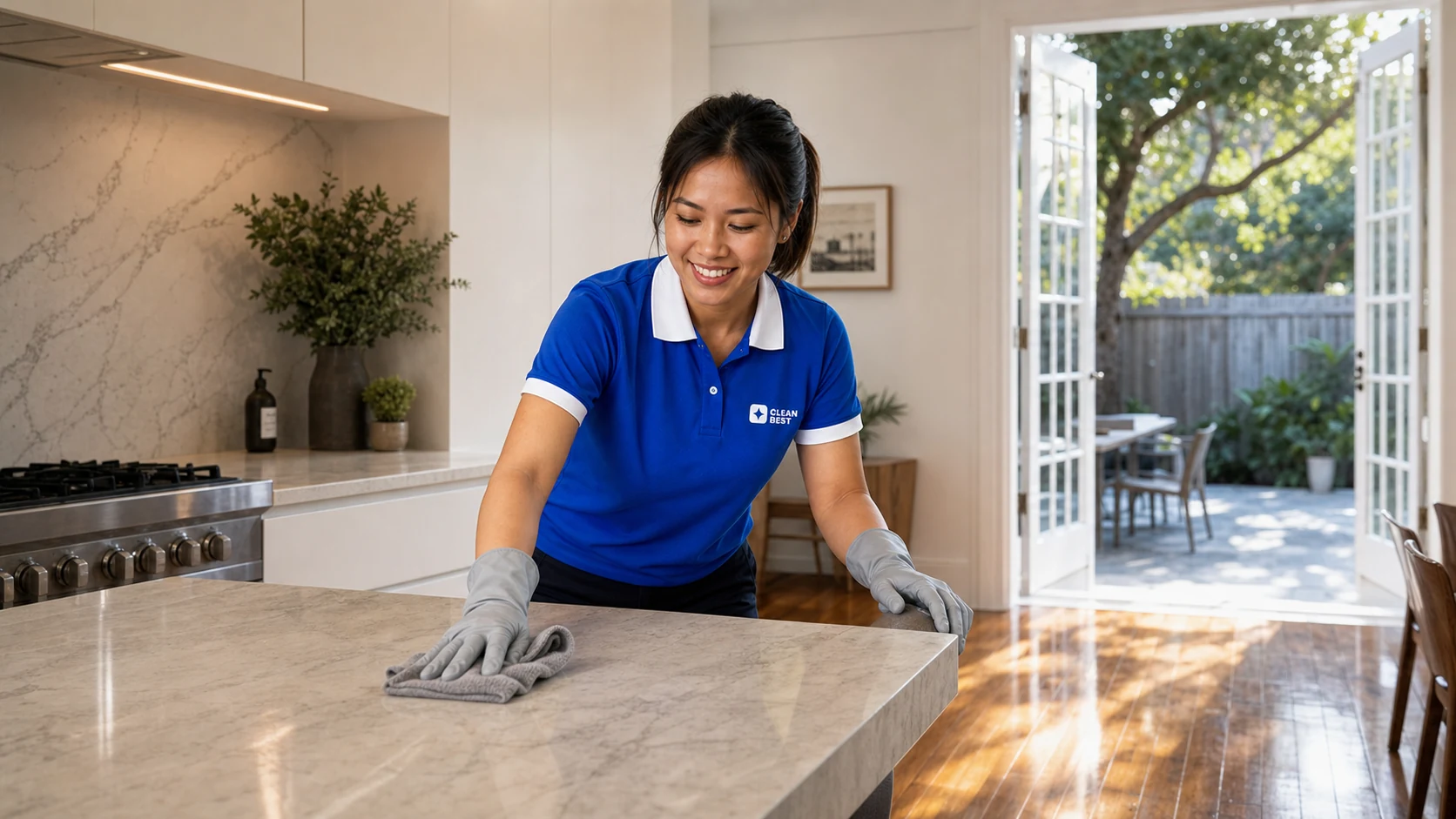
- Clean the entry, foyer, entry glass, intercom panel and door handles
- Vacuum or mop corridors and landings; spot-clean walls and skirtings
- Clean the lift car, walls, mirror, button panel and — critically — the door tracks
- Sweep and mop fire stairs, treads, risers, landings and handrails on rotation
- Wash and deodorise the bin room floor; clean chutes and hoppers on a cycle
- Rotate and rinse bins; pressure-wash the bin bay on a day the bins can be moved
- Sweep the basement car park and treat oil drips; wash the ramp on cycle
- Clean the mailbox area, notice board and any parcel or delivery zone
- Clean the shared laundry — machines' exteriors, tubs, floor and lint traps
- Clean gym, pool surrounds and roof terrace where the scheme has them
- Sweep and wash external paths, entry steps and the driveway apron
- Remove cobwebs from entries, light fittings, ceilings and stairwell corners
- Photograph each common area and report defects that need a trade, not a cleaner
Pressure washing of large hardstand, window cleaning above ground level, carpet extraction of corridors and hard-floor stripping run as periodic programs and are quoted separately.
Pricing
Strata quotes built from lot count, access and the state of the bin room
Lots, whether there is a lift, how much car park and hardstand the scheme owns, and how far the bin room has been allowed to go. Those set the number, and it is fixed in writing before the first round.
Small scheme
Walk-up blocks of roughly 6 to 20 lots — the red-brick stock of Ashfield, Dee Why and Kogarah, usually with no lift.
- Weekly round of foyer, stairs, corridors and mailboxes
- Bin room and bin bay on a program, not as an afterthought
- Photo report to the committee or strata manager each visit
- External paths and entry swept and washed on cycle
Fixed in writing before anybody picks up a mop.
Mid-rise with lift
Schemes of roughly 20 to 60 lots with a lift, a basement car park and shared amenities.
- Two or three visits a week including lift car, tracks and thresholds
- Fire stairs, landings and basement car park on rotation
- Ramp and driveway washed away from garbage day
- Named supervisor plus a monthly audit against the written scope
Fixed in writing before anybody picks up a mop.
Large or mixed-use
Towers, mixed residential and retail schemes, and buildings with a gym, pool deck or shared roof terrace.
- Daily or near-daily rounds with a day porter option for the foyer
- Gym, pool surrounds and terrace cleaning built into the same schedule
- Periodic programs — pressure washing, glass, hard-floor — scheduled by area
- Documented site register: scope, access, keys, and induction records
Fixed in writing before anybody picks up a mop.
We walk your site for nothing, then send the number within 24 hours.
Getting started
How we take on an Inner West strata scheme
Four steps — and the walkthrough goes all the way down the ramp, which is where most quotes stop.
- 1
Tell us the lot count
Lots, whether there is a lift, where the bin room sits, and how bad the car park ramp gets. That is most of the picture already.
- 2
We walk the whole scheme
Including the fire stairs and the bin room, which is where most quotes quietly stop. We photograph what we find and show the committee.
- 3
Scope, price and report format
In writing within 24 hours, with the reporting format agreed up front so the committee knows exactly what it will receive each visit.
- 4
The same cleaner, every round
Police-checked, keyed in on your access, and photographing each visit. A supervisor audits the building monthly.
FAQ
Strata cleaning questions from Inner West committees
Scope, bin rooms, reporting, and how to tell a real strata quote from a cheap one.
What does strata cleaning cover in the Inner West?
Common property only — everything the scheme owns rather than anything inside a lot. In a typical Newtown, Balmain or Marrickville building that means the foyer and entry glass, the lift car and its tracks, the corridors, the fire stairs, the bin room, the car park, the mailbox area, the laundry if there is one, and the external paths and driveway. What it does not cover is inside an apartment, and a cleaner who offers to pop in and do a lot as a favour is creating a problem for your committee.
Why does the bin room always end up being the argument?
Because it is the one space that gets worse every single day and nobody owns it. In the older Inner West and North Shore blocks the bin room is usually down a ramp, often below grade, sometimes damp, and it will smell by February no matter how many times the bins go out. The fix is a program, not a wipe: chutes and hoppers cleaned on a cycle, the floor washed and deodorised, the bins themselves rotated and rinsed, and the bay pressure-washed on a day the bins are actually there to be moved.
Do you report back to the strata committee?
Every visit. The committee — or the strata manager, whichever you prefer — gets a report with dated photographs of the common areas, anything we found that needs a trade rather than a cleaner, and anything we could not access. That is deliberately unglamorous. It exists because committees are volunteers who cannot personally inspect the fire stairs each week, and because a cleaner who is not being checked is a cleaner who eventually stops checking themselves.
How often does an Inner West apartment building need cleaning?
It depends on lot count and how much foot traffic the entry sees, not on how tall the building is. A quiet 12-lot walk-up off King Street is usually fine on one visit a week. A 60-lot block with a lift, a gym and a car park almost always needs two or three, and the bin room may need more attention than the rest of the site combined. We recommend a frequency at the walkthrough and we will tell you if the schedule the committee is considering is too light.
Can you handle the car park and the driveway?
Yes. Basement car parks get swept and their oil drips treated, and the ramp — which is where every car brings the street in with it — gets washed on a cycle. Driveways and external hardstand are pressure-washed periodically, and we schedule that away from garbage day so the bin bay is not blocked by the very bins we are trying to clean under. That sounds obvious and it is astonishing how often it is not done.
What makes a good strata cleaner different from a cheap one?
Consistency and honesty. The same cleaner every visit, so they know which stair landing collects rubbish and which lift track jams. A written report the committee can hold them to. And a willingness to tell you when a problem is not a cleaning problem — a leaking pipe, a failed extraction fan, a tile that is lifting. Cheap strata cleaning is cheap because it wipes what is visible from the foyer and never goes down the ramp.
Do you work with strata managers or directly with committees?
Both, and equally happily. Some Inner West schemes want the strata manager to hold the relationship and receive the reports; others have an engaged committee that wants to deal with the supervisor directly. We are indifferent to which, as long as it is clear from the start who approves scope changes and who we send the photographs to. What we will not do is play two masters off against each other.
Keep going
What Inner West schemes book alongside the common-property round
Same supervisor, same reporting, one invoice to the owners corporation.
Get strata cleaning Inner West committees do not have to chase
Free walkthrough of the whole scheme — bin room included — and a fixed written price within 24 hours. Call 02 5839 3012.